Endometriosis treatment in Vienna
Endometriosis is one of the most common benign gynaecological conditions, and yet it often goes unrecognised for years. In endometriosis, tissue similar to the lining of the uterus (womb) is found outside the uterus, for example on the peritoneum (the lining of the abdominal cavity), the ovaries, the bowel or the bladder. This tissue responds to the hormonal changes of the menstrual cycle and can cause inflammation, scarring, adhesions and pain. It often takes several years before the diagnosis is made. In 2003 I founded the ZEM outpatient clinic at AKH Wien, where cysts, endometriosis and fibroids are assessed and treated, and I headed it until the end of 2023. At my private practice in Vienna's 9th district, I combine this long experience with the time that such a complex condition needs for a careful assessment.
Which symptoms suggest endometriosis?
The symptoms of endometriosis are varied, and how pronounced they are can differ greatly from one patient to the next. The following are particularly typical:
Many patients tell me that they have had severe period pain since their teens and were told for a long time that this was normal. If you regularly have to miss school or work or cancel plans because of your period, or repeatedly need strong painkillers, the cause should be assessed by a doctor.
Difficulty conceiving can also be linked to endometriosis. It is estimated that endometriosis is found in about 25 to 50 per cent of women with infertility. Conversely, however, endometriosis by no means automatically rules out a pregnancy.
The severity of the symptoms also says little about how extensive the disease is. Some patients have larger or deeper lesions and hardly any symptoms, while others are in severe pain even with minor findings.
When should you come to see me?
An assessment is particularly advisable if:
If you are trying to conceive without success, an assessment is usually advisable after twelve months of regular unprotected intercourse at the latest. Depending on your age, symptoms and any risk factors, an earlier assessment may be indicated. An individual assessment is especially important if endometriosis is already known or surgery has been proposed.
How do I diagnose endometriosis at my practice in Vienna?
Consultation and gynaecological examination
Everything begins with a detailed consultation. I want to know exactly when the pain occurs, what it feels like, what triggers or relieves it, what your cycle is like and whether you wish to have children. This information alone often provides important clues.
I then carry out a gynaecological examination. On palpation I look, among other things, for tender areas of hardening behind the uterus, restricted mobility of the pelvic organs and conspicuous nodules that may indicate deep endometriosis.
Ultrasound for endometriosis
Transvaginal ultrasound is the most important imaging method in the assessment of endometriosis. It usually shows endometriomas on the ovaries clearly. In experienced hands, it can also show deep endometriosis lesions, for example on the bowel, on the bladder or in the area between the vagina and the rectum.
The ultrasound diagnosis of changes in the ovaries was one of my main research interests for many years.
When is an MRI or a laparoscopy (keyhole surgery) necessary?
If the ultrasound is not sufficiently conclusive, or the extent of deep endometriosis needs to be assessed more precisely, an additional magnetic resonance imaging (MRI) scan can be useful.
Superficial endometriosis lesions on the peritoneum, by contrast, often cannot be reliably detected by ultrasound or MRI. Normal imaging therefore does not rule out endometriosis.
Definitive histological confirmation is possible by examining a tissue sample, which is usually taken during a laparoscopy. Today, however, not every patient needs an operation simply to confirm the diagnosis. Whether a laparoscopy is advisable is something we decide on the basis of your symptoms, the imaging findings, previous treatments and your plans for your life and family.
What forms of endometriosis are there?
Endometriosis can occur in different places, and in several forms at the same time. The most important forms include:
Superficial peritoneal endometriosis
Here there are lesions, usually small, on the peritoneum. Even small changes can cause considerable symptoms.
Endometriosis of the ovaries
Here so-called endometriomas develop, that is, cysts on the ovary filled with characteristic contents. They are also known colloquially as chocolate cysts and often have a characteristic appearance on ultrasound.
Deep endometriosis
Here endometriosis tissue grows into deeper layers of tissue or into organs. The ligaments behind the uterus, the rectum, the vagina, the bladder or the ureters may be affected, for example. This form requires precise diagnosis and careful planning, particularly before an operation.
Which form you have, where the lesions are, what symptoms they cause and whether you wish to have children all influence the choice of treatment.
What causes endometriosis?
Despite intensive research, it is still not fully understood why endometriosis develops. Several factors probably act together.
Retrograde menstruation and other explanatory models
One well-known theory is so-called retrograde menstruation. During a period, some of the menstrual blood passes through the fallopian tubes into the abdominal cavity. This phenomenon also occurs in many women without endometriosis and therefore cannot explain the development of the disease on its own.
According to current knowledge, several biological mechanisms probably act together. These include:
Endometriosis lesions can also be found in surgical scars and, far more rarely, outside the abdomen and pelvis. Endometriosis is now regarded as a chronic, hormone-dependent and inflammatory disease.
How common is endometriosis?
It is estimated that about ten per cent of women of reproductive age are affected. Symptoms can begin as early as the teenage years and change over many years.
After the menopause, the hormonal activity of the disease usually declines. However, endometriosis and endometriosis-related symptoms can persist after the menopause, so the disease does not necessarily end with it.
What matters for you as a patient: endometriosis does not develop because you “did something wrong”. According to current knowledge, there is no single lifestyle choice, method of contraception or decision to postpone having a family that can be regarded as the cause of the disease.
How do I treat endometriosis at my private practice in Vienna?
There is no single treatment, only an individual treatment plan. It depends on your symptoms, the findings, your age, previous treatments and, in particular, whether and when you would like to have children. I explain the various options to you so that we can decide together which course makes sense for you.
Treating endometriosis with medication
For endometriosis-related pain, hormonal therapy is often an important treatment option. Progestogens, a combined pill taken continuously or a hormonal IUD can influence the cycle or hormonal activity and thereby reduce the symptoms considerably.
This treatment does not permanently remove existing endometriosis lesions. It can, however, control the activity of the disease, and the pain in particular, over a longer period. Anti-inflammatory painkillers can be used in addition.
Which hormonal therapy is suitable depends, among other things, on your symptoms, any contraindications and your family planning.
When is surgery advisable?
Surgery can be advisable if symptoms persist despite treatment with medication, if medication is not tolerated, if there are endometriomas or deep endometriosis, or if there are other medical reasons for an operation. If you wish to have children, surgery can also be the right decision in certain situations, but it is not automatically necessary simply because you wish to have children.
If surgery is indicated, it is usually performed as a minimally invasive procedure by laparoscopy. A camera and fine instruments are introduced into the abdominal cavity through several small incisions. Visible endometriosis lesions can then be removed and adhesions divided.
With endometriomas on the ovary, the benefit of an operation has to be weighed particularly carefully against the possible loss of healthy ovarian tissue. When I operate on an endometrioma, my aim is therefore to preserve as much healthy ovarian tissue as possible, and with it the ovarian reserve.
With deep endometriosis of the bowel, bladder or ureters, precise surgical planning is important. Depending on the findings, the operation may be carried out jointly with specialist colleagues from general surgery or urology.
The aim is to treat the relevant lesions as completely as possible while sparing the affected organs as far as possible. Removal of the uterus is considered only in selected situations, for example when your family is complete and additional conditions of the uterus or persistent symptoms point in that direction. However, a hysterectomy alone is no guarantee that all endometriosis symptoms will disappear.
Treatment after endometriosis surgery
After an operation, we decide individually whether continued hormonal treatment is advisable. If you do not currently wish to have children, longer-term hormonal therapy can reduce the recurrence of symptoms and endometriomas.
If you would like to become pregnant, this kind of hormonal treatment is generally not used, because it prevents pregnancy while it is being taken. What happens after the operation then depends on your age, your ovarian reserve, the extent of the disease, how long you have been trying to conceive and any other fertility factors.
What does endometriosis mean for fertility?
Endometriosis can impair fertility in different ways. Adhesions, for example, can impair the mobility or function of the fallopian tubes. Endometriomas, and their surgical treatment too, can affect the ovarian reserve. In addition, inflammatory changes in the pelvis can influence the conditions for a pregnancy.
Nevertheless, many women with endometriosis conceive naturally. Endometriosis therefore does not automatically mean that assisted reproduction is necessary.
Surgery or fertility clinic?
I received in-depth training in fertility disorders at the hormone outpatient clinic of the university department at AKH Wien, and I assess together with you which course makes sense.
Among other things, I take into account:
Depending on the starting point, surgery may be advisable. In other cases it is better to work directly with a fertility clinic. A combination of the two is also possible. What matters is the right sequence, so that unnecessary procedures are avoided and the existing ovarian reserve is spared as far as possible.
How can you live well with endometriosis?
Endometriosis is a chronic condition, and care does not end with an operation or a prescription. I see it as my task to support you over the long term and to adjust the treatment when your symptoms, your circumstances or your family planning change.
How often are follow-ups necessary?
How often follow-ups are advisable depends on the individual findings. Regular clinical and ultrasound follow-ups can be advisable particularly with larger endometriomas, deep endometriosis, or persistent or recurring symptoms. However, a rigid follow-up interval is not necessary for every patient. Together we decide when a further examination makes sense.
A pain diary can also help. If you use it to record the timing, severity and type of your symptoms, and any link with your cycle, intercourse, bowel movements or physical activity, the course of the condition can often be assessed more accurately.
Exercise, physiotherapy and pain management
Non-drug measures can also be part of the treatment. Regular exercise can have a positive effect on general well-being, and possibly also on pain and quality of life. Which form of exercise is pleasant and worthwhile varies greatly from person to person.
For chronic pelvic pain, the following measures can also be helpful:
Chronic pain can lead to a cycle of pain, avoidance of movement, muscle tension and further intensification of the pain. Treatment that addresses several of these factors is therefore often worthwhile.
You can read more on the page on chronic pelvic pain.
What role does diet play?
Many patients would like to know whether endometriosis can be influenced by a particular diet. There are now some studies on this, but the scientific evidence is not yet sufficient to recommend a specific “endometriosis diet” in general.
A balanced diet with plenty of vegetables, fruit and wholegrain products and as few highly processed foods as possible is sensible in principle. Individual dietary adjustments can improve symptoms in some patients, but they should not be seen as a substitute for necessary treatment with medication or surgery.
Sharing experiences with others who are affected, for example in a support group, can also be helpful in coping with a chronic condition.
If you are already being treated by another doctor and would like a second opinion, please bring all existing reports, ultrasound images and operation reports with you. I will discuss with you whether, in my view, the approach taken so far makes sense or whether other options should be considered.
Why come to me with endometriosis?
More than two decades of experience with endometriosis
Endometriosis has been one of my main clinical and research interests for more than two decades. In 2003 I founded the ZEM outpatient clinic for cysts, endometriosis and fibroids at AKH Wien, and I headed it until the end of 2023. During that time I examined, advised and operated on a large number of patients with endometriosis, including patients with extensive disease or several previous operations.
Today this long experience helps me in particular in interpreting complex findings, in ultrasound diagnosis and in deciding when surgery is advisable, and when it is not.
Experience in minimally invasive gynaecological surgery
From 1994 I was a senior consultant at the University Department of Obstetrics and Gynaecology at Vienna General Hospital (AKH Wien); since 2000 I have been an associate professor (außerordentlicher Universitätsprofessor). Minimally invasive gynaecological operations and the treatment of endometriosis were a major focus of my clinical work. Today I carry out surgical treatment at, among other places, Privatklinik Confraternität & Goldenes Kreuz and Privatklinik Döbling.
Above all, though, I believe that good endometriosis care means listening carefully. Chronic pain, restrictions in everyday life, sexuality and the wish to have children can all considerably affect quality of life. These different aspects should be taken into account when choosing a treatment.
What does treatment cost?
I run a private practice and have no contract with the health insurance funds. For the assessment at the practice you receive an invoice, which you can submit to your health insurer for reimbursement. The amount reimbursed depends on the insurer concerned and the service provided.
Supplementary private insurance may cover further costs, depending on your policy.
For a planned operation you receive a written cost estimate in advance, which you can use to obtain confirmation of cover from your private insurer where applicable. We will be happy to tell you the specific amount for your concern in advance by telephone.
Can endometriosis be cured?
Endometriosis is a chronic condition. Treatment can reduce symptoms considerably, and endometriosis lesions can be removed surgically, but a permanent cure cannot be guaranteed. Symptoms or endometriosis lesions can recur even after a successful operation. After the menopause, the activity of the disease declines in many patients. However, symptoms can persist after the menopause.
Do I need an operation to get a diagnosis?
No. Today a laparoscopy is no longer required as a matter of course in order to diagnose endometriosis or to begin treatment. In experienced hands, endometriomas and deep endometriosis can often be detected by transvaginal ultrasound. If the symptoms are typical, treatment with medication can also be started without an operation beforehand.
A laparoscopy can be advisable if the symptoms persist despite treatment, if imaging shows a finding that requires surgery, if the diagnosis remains unclear or if there are other individual reasons for an operation.
How long will I be out of action after a laparoscopy?
That depends very much on the extent of the operation. After a minor laparoscopic procedure, many patients can resume their everyday activities within a few days. After more extensive endometriosis surgery, particularly on the bowel or bladder, recovery takes correspondingly longer. The length of any hospital stay and the time at which you can return to work and sport also depend on the specific procedure and your individual recovery. Before the operation I will discuss with you what you can expect in your case.
Can endometriosis become malignant?
Endometriosis is a benign condition and not a precursor of cancer. Statistically, women with endometriosis have a slightly increased risk of certain types of ovarian cancer, but the absolute risk remains low. Endometriomas are therefore assessed on the basis of size, change over time, symptoms and ultrasound appearance. If there are suspicious changes or the finding is unclear, further investigation is necessary.
Does a change of diet or exercise help?
Exercise and a balanced diet can be worthwhile components of a comprehensive treatment plan. Initial studies show possible positive effects on pain and quality of life. However, the scientific data are still limited, and at present there is neither a clearly recommended endometriosis diet nor a particular exercise programme whose effect has been reliably proven. Such measures can usefully complement medical treatment, but they do not replace treatment with medication or surgery where this is necessary in the individual case.
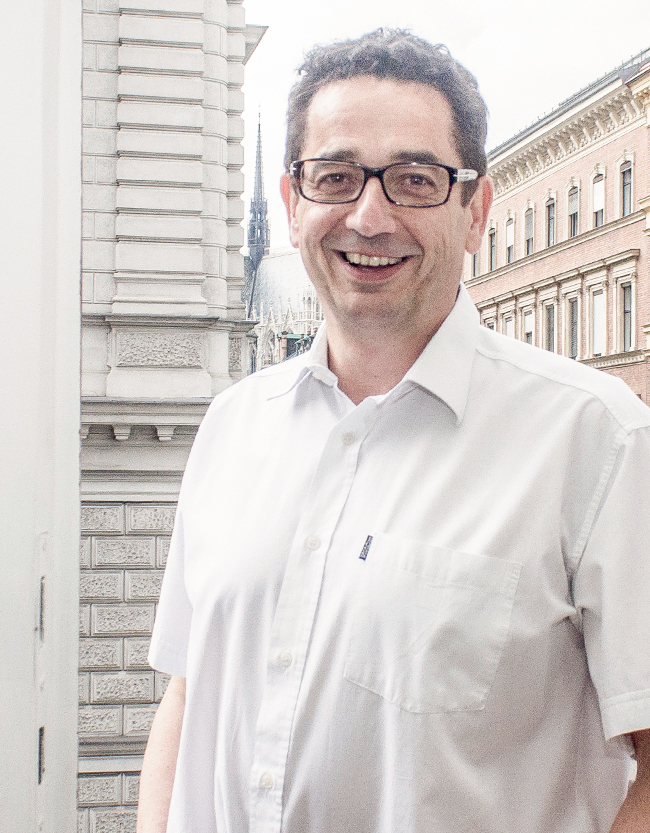
From 1989 to 2023 at the University Department of Obstetrics and Gynaecology at Vienna General Hospital (AKH Wien), senior consultant from 1994; founder and long-standing head of the ZEM outpatient clinic for cysts, endometriosis and fibroids.
To arrange your appointment for an endometriosis assessment, call +43 1 317 660 0 or e-mail ordination@prof-obwegeser.at. I give appointments by prior arrangement by telephone. My practice is at Hörlgasse 14, Top 11, 1090 Wien. Please note that the entrance is at Liechtensteinstraße 8.