Fibroid treatment in Vienna
Fibroids are benign growths that develop from the muscle tissue of the uterus (womb). Uterine fibroids are among the most common benign changes in gynaecology. Many women have one or more fibroids without ever finding out, because they cause no symptoms. Others suffer from very heavy periods, a feeling of pressure in the lower abdomen or difficulty conceiving, without knowing that fibroids may be behind it. In 2003 I founded the ZEM outpatient clinic for cysts, endometriosis and fibroids at AKH Wien, and I headed it until the end of 2023. At my private practice in Vienna's 9th district, I take the time to assess your findings and discuss with you whether treatment is needed at all and which option is best suited to your situation.
What are fibroids and where do they grow?
Fibroids develop from the smooth muscle of the uterus and can occur singly or in larger numbers. They are hormone-dependent, and they develop or enlarge mainly during the reproductive years. After the menopause many fibroids become smaller, because hormonal stimulation declines.
Fibroids themselves are benign. Very rarely, a change initially thought to be a fibroid may conceal a different, malignant disease such as a uterine sarcoma. The medical term for a uterus with several fibroids is uterus myomatosus.
What types of fibroid are there?
For symptoms and treatment, what matters most, apart from size, is where a fibroid lies and whether it alters the uterine cavity. In simplified terms, there are three main groups:
In practice there are also intermediate forms. I therefore assess every fibroid on the basis of its exact position, its size and its relationship to the uterine cavity.
When should fibroids be assessed?
A fibroid that is discovered by chance on ultrasound and causes no symptoms is initially no cause for concern, and often does not need to be treated either.
A more detailed assessment is particularly advisable if you have:
Heavy bleeding and iron deficiency
Very heavy periods are among the most common symptoms of fibroids. If you repeatedly have to change pads or tampons during the night, pass larger blood clots, or find that the bleeding largely dictates your everyday life, the cause should be assessed.
Increased blood loss over a longer period can lead to iron deficiency and eventually to anaemia. Typical symptoms are tiredness, reduced stamina, weakness or shortness of breath. Hair loss can also occur. With heavy bleeding I therefore check not only the blood count but, in particular, your iron stores, for example by means of the ferritin level.
Fibroids and fertility
If you are having difficulty conceiving or have had repeated miscarriages, the position of the fibroid matters most. Fibroids that protrude into the uterine cavity or clearly distort it can impair the implantation of an embryo.
That does not mean every fibroid has to be removed before a pregnancy. Whether treatment is advisable depends on the position, size and number of the fibroids and on other possible causes of difficulty conceiving.
What does rapid growth of a fibroid mean?
During the reproductive years, fibroids can grow at different rates, and their size can also change again. Rapid growth alone does not mean that a fibroid is malignant.
However, a newly appearing or clearly enlarging mass after the menopause requires particular attention. Growth is more unusual at this stage of life and should be carefully assessed.
How do I examine fibroids at my practice in Vienna?
Consultation and gynaecological examination
Everything begins with a detailed consultation. I want to understand your bleeding pattern, any pain or pressure symptoms and your personal circumstances. One particularly important question is whether you wish to have children, now or in the future.
If you already have blood test results, ultrasound images or earlier doctors' letters, please bring them to your appointment. With heavy bleeding I check your blood count and iron stores, because iron deficiency should be treated as well, regardless of how the fibroids themselves are managed.
Ultrasound for fibroids
This is followed by the gynaecological examination with transvaginal ultrasound. Ultrasound is the most important imaging examination for assessing fibroids.
In particular, I record:
If the uterus is greatly enlarged, an additional ultrasound through the abdominal wall can be useful. In selected cases, for example with complex findings, before certain operations or when ultrasound does not allow a clear assessment, an additional magnetic resonance imaging (MRI) scan can be useful.
What treatment options are there for fibroids?
With uterine fibroids there is rarely only one right course. What matters are your symptoms, the size, position and number of the fibroids, your age, and whether you wish to keep your uterus or become pregnant later.
Monitoring fibroids
A fibroid that causes no symptoms often does not need to be treated at all. I decide individually whether an ultrasound follow-up is advisable and at what intervals. Among other things, I take into account your age, the size and position of the fibroid, previous changes in size and whether you are already in or past the menopause. A fixed follow-up interval of six or twelve months is not necessary for every patient.
Treating fibroids with medication
Medication can relieve heavy bleeding and pain in particular. Different options can be considered, depending on the situation.
Non-hormonal medicines such as tranexamic acid can reduce blood loss during your period. Certain anti-inflammatory painkillers can also help with pain and, to some extent, with heavy bleeding.
Hormonal treatments such as a hormonal IUD, combined hormonal contraceptives or progestogens can reduce bleeding problems considerably. A hormonal IUD is particularly suitable when the uterine cavity is not substantially distorted by the fibroids.
In selected situations, special hormonal medicines can also be used that temporarily suppress the effect of the ovarian hormones and can thereby reduce symptoms or shrink fibroids.
These drug treatments mainly treat the symptoms. Which of them is appropriate depends on the findings, your personal risk factors and whether you may wish to have children.
If you have iron deficiency, I treat this as well. Depending on its severity, iron can be given as tablets or, where indicated, as an infusion.
When is surgery advisable?
Surgery can be advisable if fibroids cause severe symptoms, if medication does not help enough, if the fibroids substantially alter the uterine cavity or if a fibroid is considered relevant to your wish to have children. Which surgical method is suitable depends mainly on the position, size and number of the fibroids.
Hysteroscopy for submucosal fibroids
Fibroids that protrude into the uterine cavity can often be removed by hysteroscopy (a camera examination of the inside of the uterus). A thin optical instrument is passed through the vagina and cervix into the uterus. From there the fibroid can be removed in a targeted way. No abdominal incision is needed.
How quickly you are back to full strength afterwards depends on the extent of the procedure and your individual recovery. After minor hysteroscopic procedures, recovery is usually quick.
Laparoscopy for fibroids in the wall of the uterus
Fibroids in the muscular wall or on the outside of the uterus can, depending on their size, number and position, be removed by laparoscopy (keyhole surgery). A camera and fine instruments are introduced through several small incisions in the skin. The fibroid is detached from the wall of the uterus and the uterus is then carefully reconstructed. The aim is to preserve the uterus and as much healthy tissue as possible.
With very large, numerous or awkwardly positioned fibroids, an open operation through an abdominal incision can still be the medically more appropriate or safer method.
When is removal of the uterus considered?
If your family is complete, you have severe symptoms and other treatment options are not suitable or not wanted, removal of the uterus (a hysterectomy) can also be considered. It is the definitive treatment for uterine fibroids: once the uterus has been removed, no new fibroids can develop there and fibroid-related menstrual bleeding no longer occurs.
Which surgical method is suitable is decided individually. Where possible, a hysterectomy can also be performed as a minimally invasive procedure. However, keeping the uterus is important to many patients. I therefore always discuss a hysterectomy in the context of the available alternatives, your symptoms and your personal wishes.
What treatments are there without surgery?
Besides medication and surgery, there are interventional procedures in which the uterus is preserved.
In uterine artery embolisation, the blood vessels that supply the fibroids are selectively blocked via a catheter. As a result, the fibroids receive less blood and shrink.
There are also procedures using focused ultrasound, in which fibroid tissue is treated with heat without a conventional operation.
Such procedures can be a worthwhile alternative for selected patients, but they are not suitable for every size and position. If you wish to have children, the decision has to be weighed particularly carefully, because the data on later pregnancies are, depending on the procedure, more limited than after a conventional surgical removal of fibroids.
If such a procedure is an option for you, I will discuss the advantages and disadvantages with you and, if required, refer you to a centre that specialises in it.
Where do the operations take place?
Since I left the university department at AKH Wien at the end of 2023, operations no longer take place as part of my work at AKH Wien. Depending on the procedure, your insurance status and individual arrangement, operations can be carried out at, among other places, Privatklinik Confraternität & Goldenes Kreuz or Privatklinik Döbling.
What does follow-up after fibroid surgery involve?
After an operation, we arrange the follow-ups according to the procedure performed and how your recovery is progressing. Often there is a first follow-up after about two weeks and a further examination after a few months. Among other things, we assess wound healing, your bleeding symptoms and, after removal of a fibroid from the wall of the uterus, the healing of the uterus.
What does preserving the uterus mean if you wish to have children?
If an operation is necessary and you would like to become pregnant later, preserving the uterus is the priority. In a myomectomy, therefore, the fibroid is removed selectively while the uterus is preserved.
Not every fibroid needs to be operated on if you wish to have children. Fibroids that protrude into the uterine cavity or clearly distort it are particularly relevant. With fibroids in other positions, the decision depends, among other things, on size, symptoms, previous pregnancies and other possible causes of difficulty conceiving.
The uterus-preserving approach was also a key aim of the ZEM outpatient clinic, which I founded at AKH Wien in 2003 and headed until the end of 2023. It remains a central concern of mine at my practice today.
Pregnancy after fibroid surgery
If you wish to have children, I plan the removal of a fibroid so that as much healthy uterine tissue as possible is preserved and the wall of the uterus is carefully reconstructed. After a fibroid has been removed from the wall of the uterus, the tissue needs time to heal. How long you should wait before a pregnancy cannot be laid down as a general rule. The recommendation depends, among other things, on
A waiting period of several months is often recommended. I will discuss the appropriate period for you individually on the basis of the operative findings.
Is a caesarean section necessary after fibroid surgery?
Not every woman automatically needs a caesarean section after a myomectomy. Whether a vaginal birth is possible or a caesarean birth is recommended depends, among other things, on the position and depth of the former fibroids, the number and depth of the incisions in the wall of the uterus, and whether the uterine cavity was opened during the operation.
After a purely hysteroscopic removal of a fibroid from the uterine cavity, there are generally no comparable scars in the outer wall of the uterus.
I will discuss the operative findings, and what they mean for a later pregnancy and birth, with you at the time of the procedure.
Why see Prof. Obwegeser about fibroids?
Long experience with fibroids and uterus-preserving surgery
I have been a specialist in gynaecology and obstetrics since 1993, and from 1994 I worked as a consultant at the University Department of Obstetrics and Gynaecology at Vienna General Hospital (AKH Wien). I left the university department at the end of 2023.
Fibroids and their uterus-preserving surgical treatment have been among my main clinical interests for many years. In 2003 I founded the ZEM outpatient clinic for cysts, endometriosis and fibroids at AKH Wien, and I headed it until the end of 2023.
There I examined, advised and operated on numerous patients with both straightforward and complex fibroid findings. They included patients with very large or numerous fibroids and patients who had already had previous operations.
Today this experience helps me to judge when treatment is necessary, which procedure is suitable and when a fibroid can simply be monitored.
Not every fibroid needs to be treated
Surgery is not an end in itself. Many fibroids cause no symptoms and need no treatment.
Today various options are available, depending on the situation:
Which treatment is appropriate depends on your findings, your symptoms and your personal wishes. At my practice I take the time to discuss these options with you and to agree a suitable course of treatment together.
What does treatment cost?
My practice is a private practice without a health-insurance contract. After the examination you receive an invoice, which you can submit to your health insurer for reimbursement. The amount reimbursed depends on the insurer concerned and the services provided.
Depending on your policy, supplementary private insurance may cover further costs in full or in part.
Before a planned operation you receive a written cost estimate. It sets out the costs transparently, so that you can obtain confirmation of cover from your private insurer in advance. We will be happy to tell you the specific amount for your concern in advance by telephone. You will find further information on the page about the practice.
Does every fibroid have to be removed?
No. Many fibroids cause no symptoms and need no treatment. What matters is not just the size or the mere presence of a fibroid, but above all symptoms, position, changes over time and your personal situation. Even if you wish to have children, not every fibroid has to be removed. Fibroids that distort the uterine cavity are particularly relevant. I decide individually whether a symptom-free fibroid should be followed up and at what intervals.
Can fibroids become malignant?
Fibroids are benign tumours of the uterine muscle. A very rare malignant tumour of the uterine muscle is the so-called leiomyosarcoma. According to current knowledge, a leiomyosarcoma does not generally arise from an existing benign fibroid turning into a malignant tumour. Very rarely, a change initially thought to be a fibroid may later turn out to be malignant.
Rapid growth alone is not proof of malignancy either. However, a newly appearing or clearly growing mass after the menopause should be assessed particularly carefully. Depending on the findings, ultrasound and magnetic resonance imaging (MRI) can provide additional information. Imaging alone, however, cannot reliably rule out a malignant change in every case.
Can I get pregnant with fibroids?
Yes. Many women with fibroids become pregnant without any problems. Whether a fibroid affects fertility depends mainly on its position. Fibroids that protrude into the uterine cavity or clearly distort it can impair implantation. In such cases, surgical removal before a planned pregnancy can be advisable.
With intramural or subserosal fibroids that do not distort the uterine cavity, the benefit of surgery for fertility is less clear. Here I therefore decide individually on the basis of the overall findings.
Do fibroids grow back after surgery?
A fibroid that has been completely removed does not itself grow back. However, as long as the ovaries are hormonally active, other or new fibroids can develop. How likely that is depends, among other things, on your age, the number of fibroids present and your individual predisposition. After the menopause, fibroids generally become smaller or stop growing.
How long will I be out of action after the procedure?
That depends largely on which procedure is performed. After hysteroscopic removal of a fibroid, many patients recover within a few days. After a laparoscopic myomectomy the body needs more time, particularly if larger fibroids or several fibroids were removed from the wall of the uterus. After an open operation through an abdominal incision, the recovery period is usually longer still.
When you can return to work, take up sport again and be back to full physical strength depends on the extent of the procedure, the kind of work you do and your personal recovery. Before the operation I will discuss with you how long you should expect it to take in your particular case.
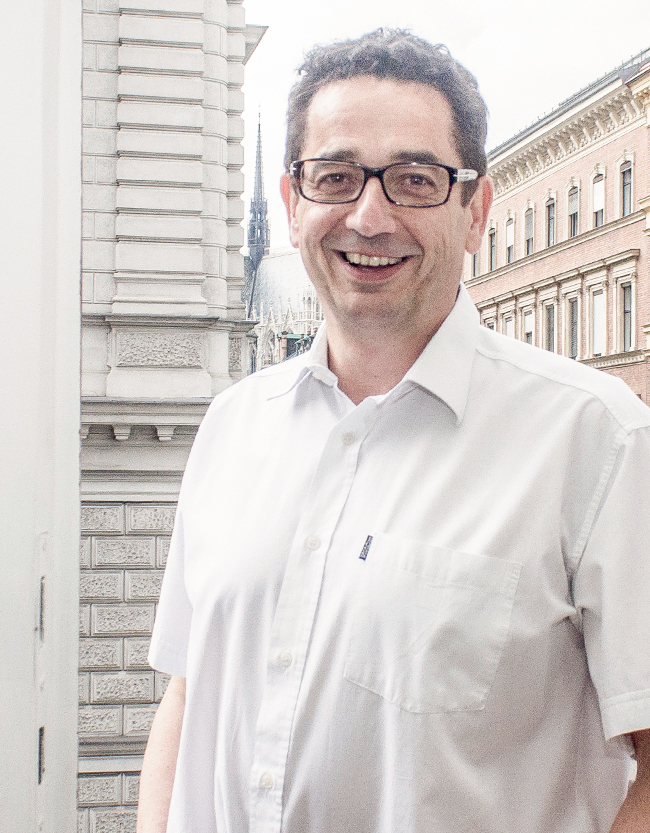
From 1989 to 2023 at the University Department of Obstetrics and Gynaecology at Vienna General Hospital (AKH Wien), senior consultant from 1994; founder and long-standing head of the ZEM outpatient clinic for cysts, endometriosis and fibroids.
If you would like to have heavy bleeding, pressure symptoms or a fibroid finding assessed, please arrange an appointment by telephone on +43 1 317 660 0 or write to ordination@prof-obwegeser.at. My practice is at Hörlgasse 14, Top 11, 1090 Wien. Please note that the entrance is at Liechtensteinstraße 8.